

Presses
Shop by Category
Summary for Presses
Metal Presses - Powerful Force for Metalworking Projects
Grizzly's metal press collection includes both arbor presses and hydraulic presses, so you can find the option that works best for your specific pressing, assembly, and forming needs. We offer arbor presses for small shops that need a reliable unit for light-duty punching or shearing, up to hydraulic presses for industrial applications.
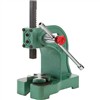
Arbor - An arbor press uses a hand lever or ratcheting mechanism to apply mechanical pressure, while a hydraulic press uses hydraulic fluid pressure to achieve a much higher force. Ranging from 1/2 to 5-ton sizes, we have an arbor press just right for staking, riveting, and bearing installation and removal. Our smaller versions are a great choice for hobbyists, while our largest models are perfect for press-fitting automotive and machinery components.
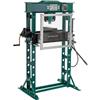
Hydraulic - These presses use heavy-duty arbor plates to provide extreme force for broaching, staking, and disassembly of parts and components in automotive, aerospace, manufacturing, and other industries. Features such as interchangeable ram ends provide versatility to switch between material types.
Frequently Asked Questions:
What size arbor press should I purchase?
Here is a brief guide to arbor press sizing, based on the amount of force needed for various project types:
- 1/2- to 1-Ton: Light-duty projects such as jewelry making and light assembly work.
- 1-2 Ton: Perfect for general shop use - press-fitting bearings, bushings, and sleeves.
- 3-5 Ton: A heavy-duty option for punching, broaching, and precision forming.
Other factors to consider when selecting an arbor press including your common workpiece size and how often you will be using the press. Ratcheting models, for example, are ideal for repetitive processes as the mechanism reduces fatigue during use and provides more control.
How does a hydraulic press work?
A hydraulic press uses fluid to create powerful force that translates to extreme pressing power. A pump pushes hydraulic oil into the main cylinder, and that fluid pressure acts on the piston to generate massive mechanical force. Pressure pushes the ram down, which then pushes against your workpiece to bend, punch, or straighten with smooth, consistent force.
We are experiencing {{ network.message }}
We're sorry, we couldn't find any results{{ !keywords && !searchWithin ? '...' : '' }}
for '{{ searchWithin }}'
{{ searchWithin ? ' within' : ' for' }}
'{{ keywords }}'
Did You Mean?
Summary for Presses
Metal Presses - Powerful Force for Metalworking Projects
Grizzly's metal press collection includes both arbor presses and hydraulic presses, so you can find the option that works best for your specific pressing, assembly, and forming needs. We offer arbor presses for small shops that need a reliable unit for light-duty punching or shearing, up to hydraulic presses for industrial applications.
Arbor - An arbor press uses a hand lever or ratcheting mechanism to apply mechanical pressure, while a hydraulic press uses hydraulic fluid pressure to achieve a much higher force. Ranging from 1/2 to 5-ton sizes, we have an arbor press just right for staking, riveting, and bearing installation and removal. Our smaller versions are a great choice for hobbyists, while our largest models are perfect for press-fitting automotive and machinery components.
Hydraulic - These presses use heavy-duty arbor plates to provide extreme force for broaching, staking, and disassembly of parts and components in automotive, aerospace, manufacturing, and other industries. Features such as interchangeable ram ends provide versatility to switch between material types.
Frequently Asked Questions:
What size arbor press should I purchase?
Here is a brief guide to arbor press sizing, based on the amount of force needed for various project types:
- 1/2- to 1-Ton: Light-duty projects such as jewelry making and light assembly work.
- 1-2 Ton: Perfect for general shop use - press-fitting bearings, bushings, and sleeves.
- 3-5 Ton: A heavy-duty option for punching, broaching, and precision forming.
Other factors to consider when selecting an arbor press including your common workpiece size and how often you will be using the press. Ratcheting models, for example, are ideal for repetitive processes as the mechanism reduces fatigue during use and provides more control.
How does a hydraulic press work?
A hydraulic press uses fluid to create powerful force that translates to extreme pressing power. A pump pushes hydraulic oil into the main cylinder, and that fluid pressure acts on the piston to generate massive mechanical force. Pressure pushes the ram down, which then pushes against your workpiece to bend, punch, or straighten with smooth, consistent force.
Shop By Category
- Abrasives & Sanding
- Adhesives
- Air Accessories
- Air Compressors
- Automotive Equipment
- Woodworking Bandsaws
- Contractor, Home & Shop
- Cutlery
- Cutting Tools
- Drill Presses
- Drilling & Boring
- Dust Collection Accessories